| News Channels |
| |
|
| |
|
| |
|
| |
|
| |
| Quick Links |
| |
|
| |
|
| |
|
| |
|
| |
|
| |
|
| |
|
| |
|
| |
| Entertainment |
| |
|
| |
|
| |
|
| |
|
| |
|
| |
|
| |
| MAO Exclusives |
| |
|
| |
|
| |
|
| |
|
| |
|
| |
|
| |
|
| |
|
| |
|
| |
|
| Weather |
| |
|
| |
| Contest Entry |
 |
|
 |
|
|
|
 |
|
 |
| Bamboo Gardening | | By: From |
| 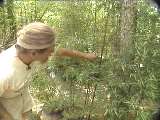 Bamboo has become a popular ornamental grass. Gardeners should be aware that bamboos may be classified as clump-forming or running types -- the latter of which spread by rhizomes that can quickly get out of control. Bamboo has become a popular ornamental grass. Gardeners should be aware that bamboos may be classified as clump-forming or running types -- the latter of which spread by rhizomes that can quickly get out of control.
All bamboos need full sun to partial shade and grow phenomenally fast during their short growth period. To achieve rapid growth, water frequently, and fertilize with a lawn fertilizer. To restrict size, water and fertilize less. To contain bamboo, dig a trench around the clump, and when a rhizome moves into the trench, cut it off. Thin the patch by removing whole stems.
Bamboo grower Adam Turtle has a passion for the plant. Moso bamboo (Phyllostachys heterocycla pubescens) (figure A), he says, is the most popular type worldwide. A running bamboo, it reaches a height of 40' to 60' and is harder than hickory wood.
Palmleaf bamboo (Sasa palmata) (figure B) has leaves like those of a palm. It grows larger in moist, cool-summer climates. A rampant spreader, it prefers shade and grows 4' to 5' tall.
Black bamboo (Phyllostachys nigra) (figure C), a clump-forming species, reaches 4' to 8' in height. It is coveted for its beautiful black stems, and where summers are hot it needs afternoon shade. The canes of black bamboo darken as they age.
Yellow-grove bamboo (Phyllostachys aureosulcata) (figure D) reaches 12' to 15' in height and is clump-forming. It is most common in the Southern states.
The spreading Narihira bamboo (Semiarundinaria fastuosa) (figure E) grows 8' to 10' tall and is thought to be the plant that provided Thomas Edison the filaments used in his first light bulb.
Shibataea kumasasa (figure F) is small, growing just 2' to 3' tall, and easily contained. It requires acidic soil.
The thicket-forming arrow bamboo (Pseudosasa japonica) (figure G) is thought to have been used by Japanese samurai as a source of arrows. Most of the foliage is held near the crown of the plant. The stems are 12" to 18" long and very straight.
| |
|
|
|
|
| Current Weather |
|
 |
| Local Forecast |
| Post Your Ad Now! |
 |
| Advertisement |
|
 |
 |
 |
 |
 |
 |
 |
 |
 |
 |
 |
 |
 |
 |
 |
| Partners |
 |
 |
| We support the United Way |
|
 |
|
|
| Click The Seal Above To Make Payments To MAO! |
|
|
|